



Single source of truth

Automated distribution

Ensured consistency

Text & translation

Import & auto-creation

Export in any format
- +300Custom integrations
- #1User-friendly PIM
- +150MDaily shared data lines
"In Kontainer, we avoid errors and work consistently across the organization."






Justin W.
CEO, Founder
"It's so intuitive, well-designed... 3 years in and we're thrilled"


Charlotte S.
Web Manager
"Many useful features for people inside and outside the organization"



Kontainer PIM integrates with all your favorite apps and platforms

























































Import & structure

Enrich & approve

Distribute & maintain
FAQs: Kontainer PIM
What is a PIM system?
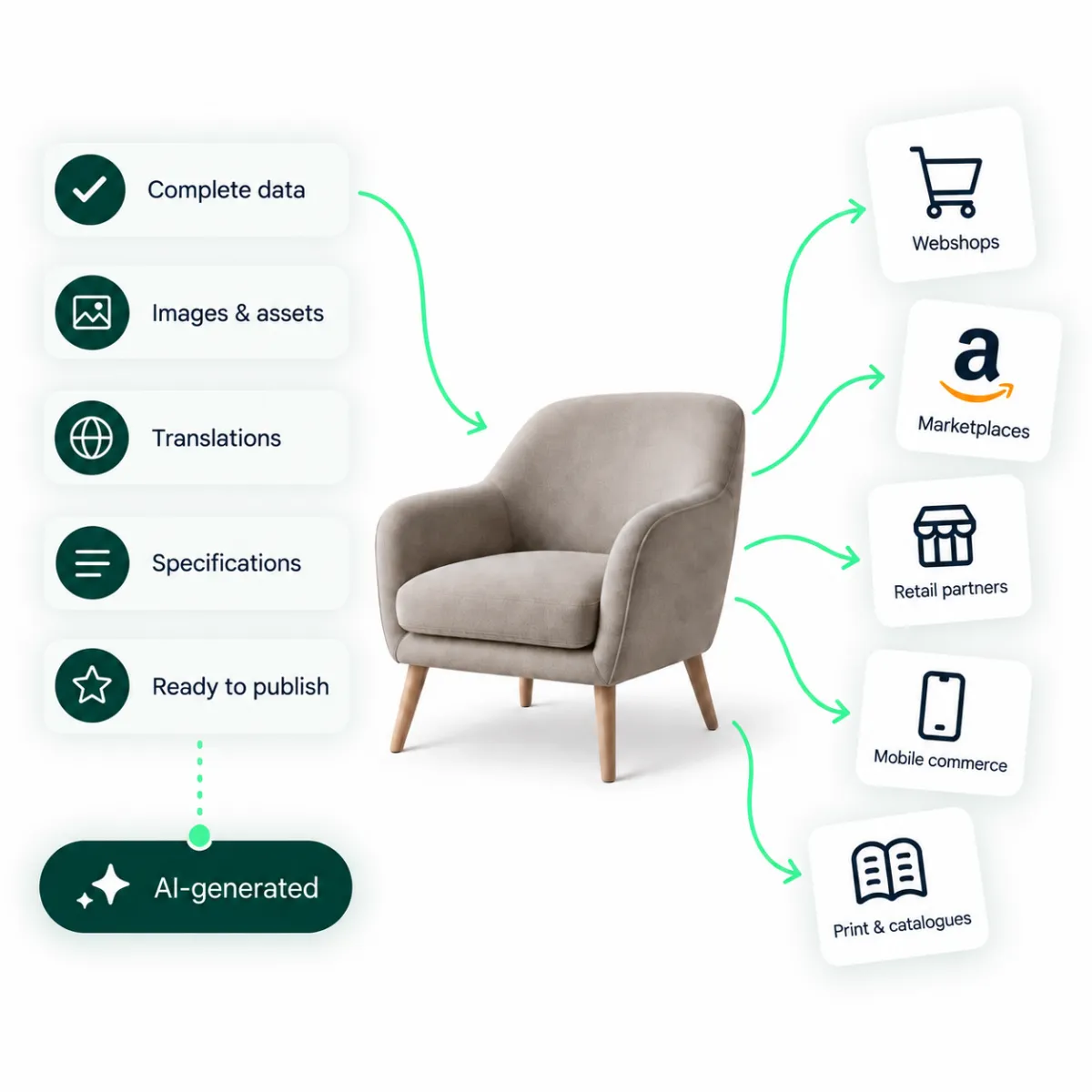
A Product Information Management (PIM) system centralizes all product data — specifications, attributes, descriptions, translations, and media — in a single source of truth. It ensures consistency across channels and reduces manual work.
Why combine PIM and DAM?
Product data and digital assets belong together. A combined PIM + DAM ensures that images, videos, manuals, and product information stay linked, updated, and distributed automatically.
How does Kontainer integrate with ERP, CMS, and eCommerce platforms?
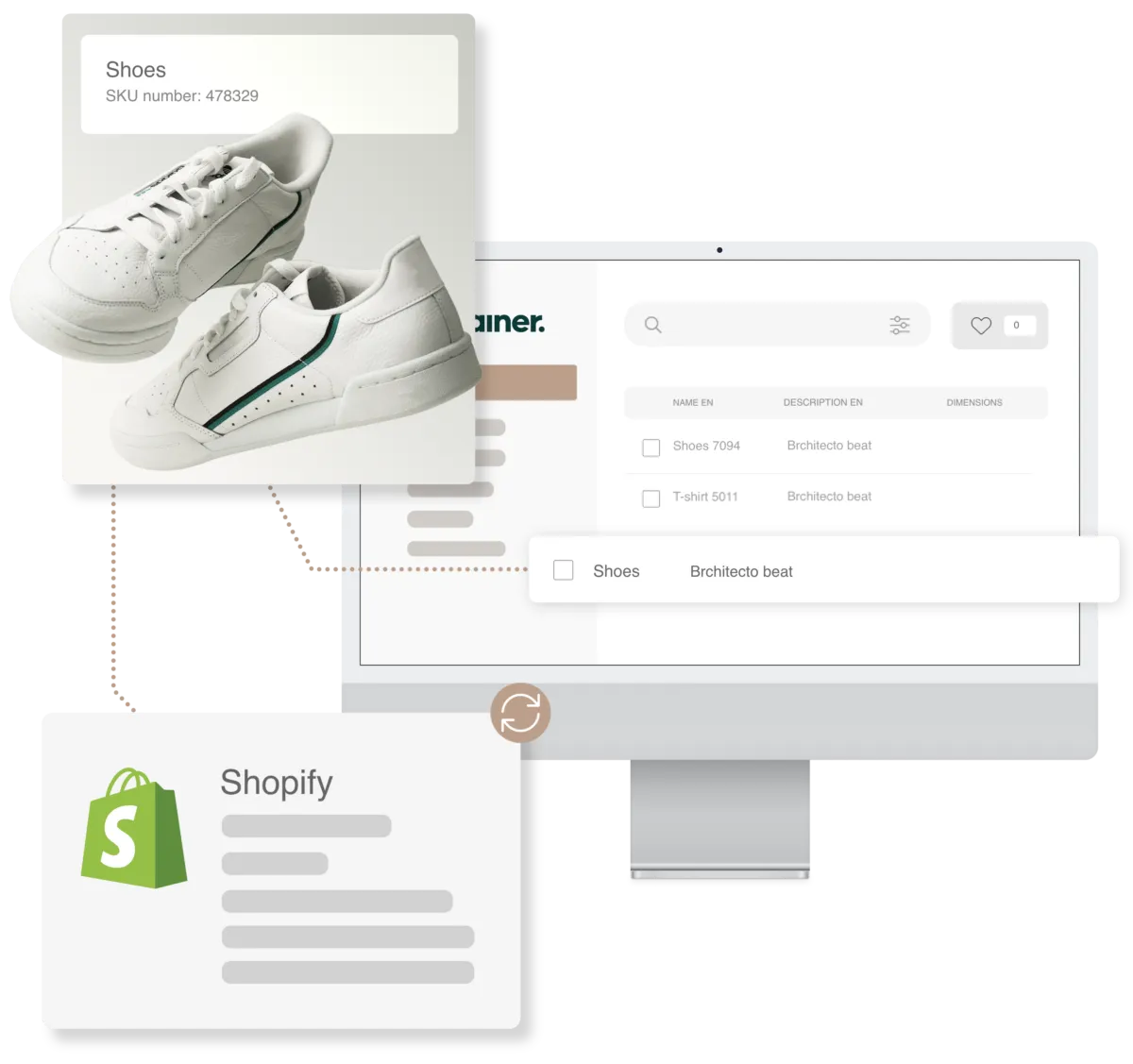
Kontainer connects to ERP systems for master data, and syncs with CMS/eCommerce platforms to publish enriched product information. Integrations can be API-based, connector-based, or custom.
How does Kontainer handle translations?
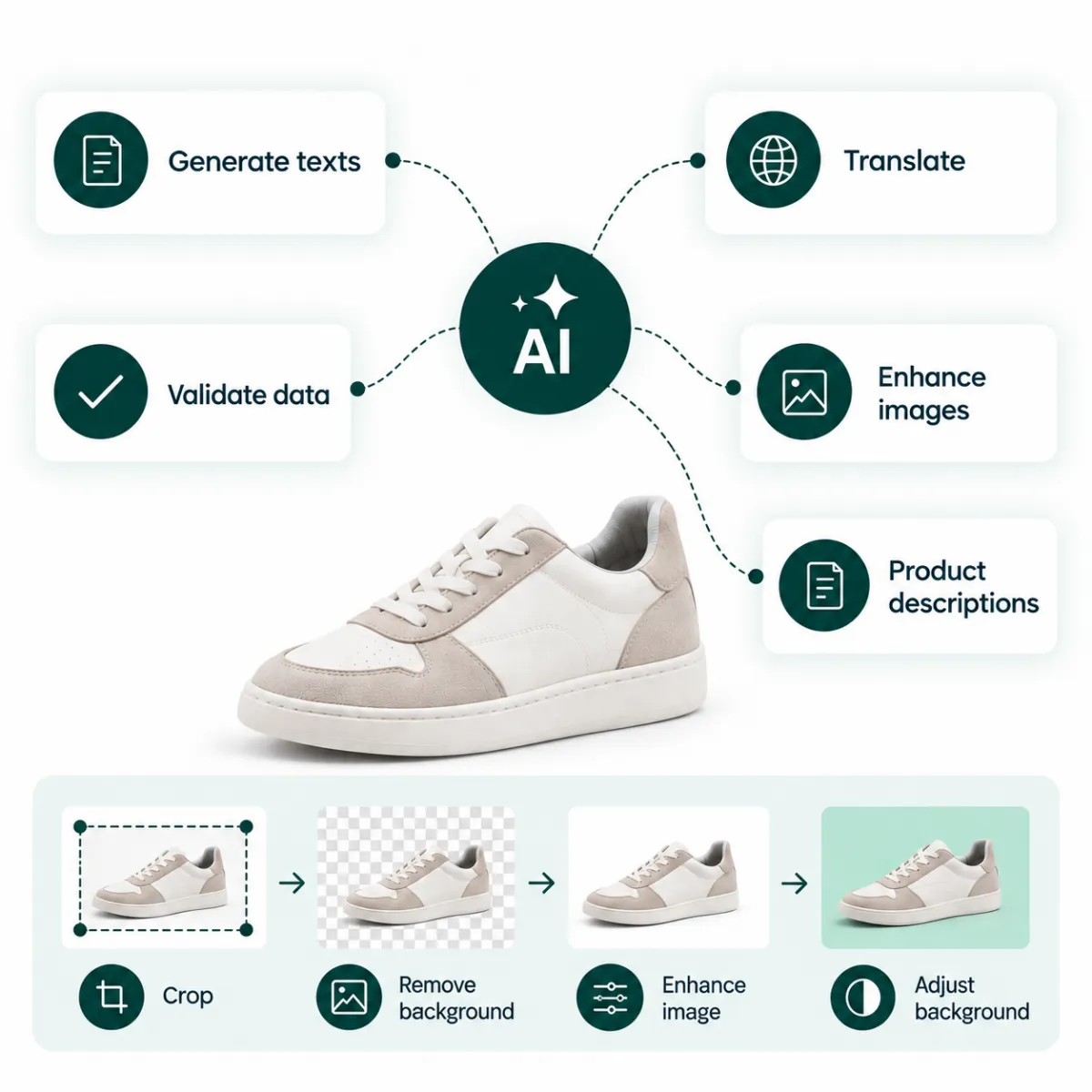
You can manage multiple languages via an AI tool or manually assign translation tasks, tracking progress and correcting where necessary. Each language version stays linked to the same product record.
How does Kontainer improve SEO?
Kontainer supports metadata, alt text, structured product data, and optimized image delivery — ensuring consistent SEO across channels.
What types of media can Kontainer store?
Kontainer DAM stores all file types, including images, videos, PDFs, CAD files, manuals, 3D files, and more. All assets can be tagged, categorized, and linked to products in PIM.
How does data validation work?
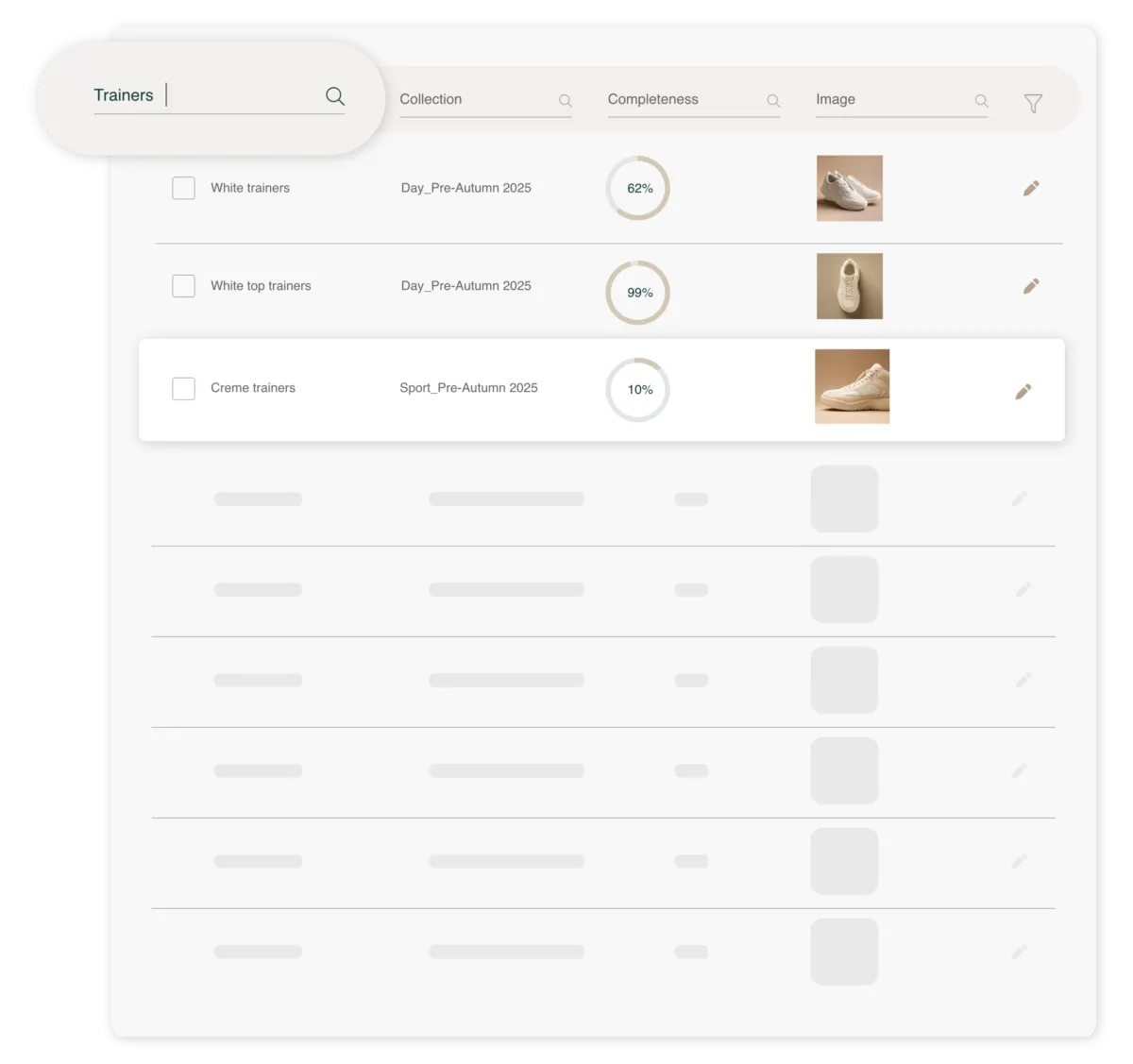
Kontainer uses rules and completeness scoring to ensure product data meets your quality standards before publishing.
Which industries benefit most from PIM + DAM?
Fashion, furniture, manufacturing, retail, lifestyle, electronics, and any business with large product catalogs or frequent updates.
Museums, NGOs, educational organizations and others with archives and associated data to store and maintain.
How long does implementation take?
Most companies go live within 4–12 weeks, depending on data complexity, integrations, and catalog size.