
Why effective file organisation is essential
Digital transformation has brought countless benefits, but it has also made the volume of data a company handles every day grow exponentially. From marketing material and product specifications to internal documents – the sheer mass of files can be overwhelming. A structured way of filing them is therefore not simply a question of tidiness, but a critical factor in running the business.
- Time saved: long searches for the file you need are a productivity killer.
- Fewer errors: working from outdated or incorrect versions can have expensive consequences.
- Better collaboration: teams work together more effectively when everyone has access to the right, current information.
- Legal certainty: complying with regulation such as the GDPR requires data management that is secure and can be accounted for.
- A clearer overview: a clear structure makes for better-informed decisions and a faster response to changes in the market.
Since 2001 we at Kontainer have helped companies meet these challenges. With +20 years of experience, we know what matters when it comes to organising files across a company efficiently.
The groundwork for organising files well
Before you invest in specific tools or systems, it is worth building a solid foundation for how your files are organised. That means clear guidelines and a deliberate approach.
1. A consistent folder structure
A logical folder structure that is easy to understand is the foundation of everything else. Remember that everyone on the team should be able to use it intuitively. We recommend a hierarchy that moves from broad categories towards more specific information. For example:
Category        Subcategory             Example
Marketing       Campaigns              /Marketing/Campaigns/Summer2026
Products        Model_XY               /Products/Model_XY/Images
HR              Contracts              /HR/Employee_Smith
Take care not to create too many subfolders, so navigation does not become harder than it needs to be. A depth of three to five levels is often ideal.
2. Consistent file naming
Naming files should be just as consistent as the folder structure. Set clear rules that everyone follows. Good file naming often includes:
- Project name or ID
- What the file contains (for example “headerimage”, “pressrelease”)
- Date (in the format YYYYMMDD)
- Version number
Example: Campaign_Summer2024_Headerimage_20240515_v03.jpg
3. Versioning and history
On collaborative projects in particular, it is essential to keep track of the different versions of a file. Who changed what, and when? Which version is the current one? A system that offers a complete version history is worth a great deal here. Our DAM solution at Kontainer stores every version automatically, so you can always go back to an earlier state.
4. Access rights and permissions
Not every employee needs access to every file. Sensitive data such as financial reports or personal employee information has to be protected. Define clear access rights based on roles and responsibilities. At Kontainer we place great weight on security and offer detailed GDPR-compliant access management, so you can control precisely who may see, edit or download which files. Our data is hosted exclusively in secure data centres within the EU.
Advanced tools for excellent file organisation
The groundwork helps you create order to begin with, but traditional file systems quickly reach their limits when the volumes are large and the requirements complex. That is where our specialised solutions come in.
Digital Asset Management (DAM)
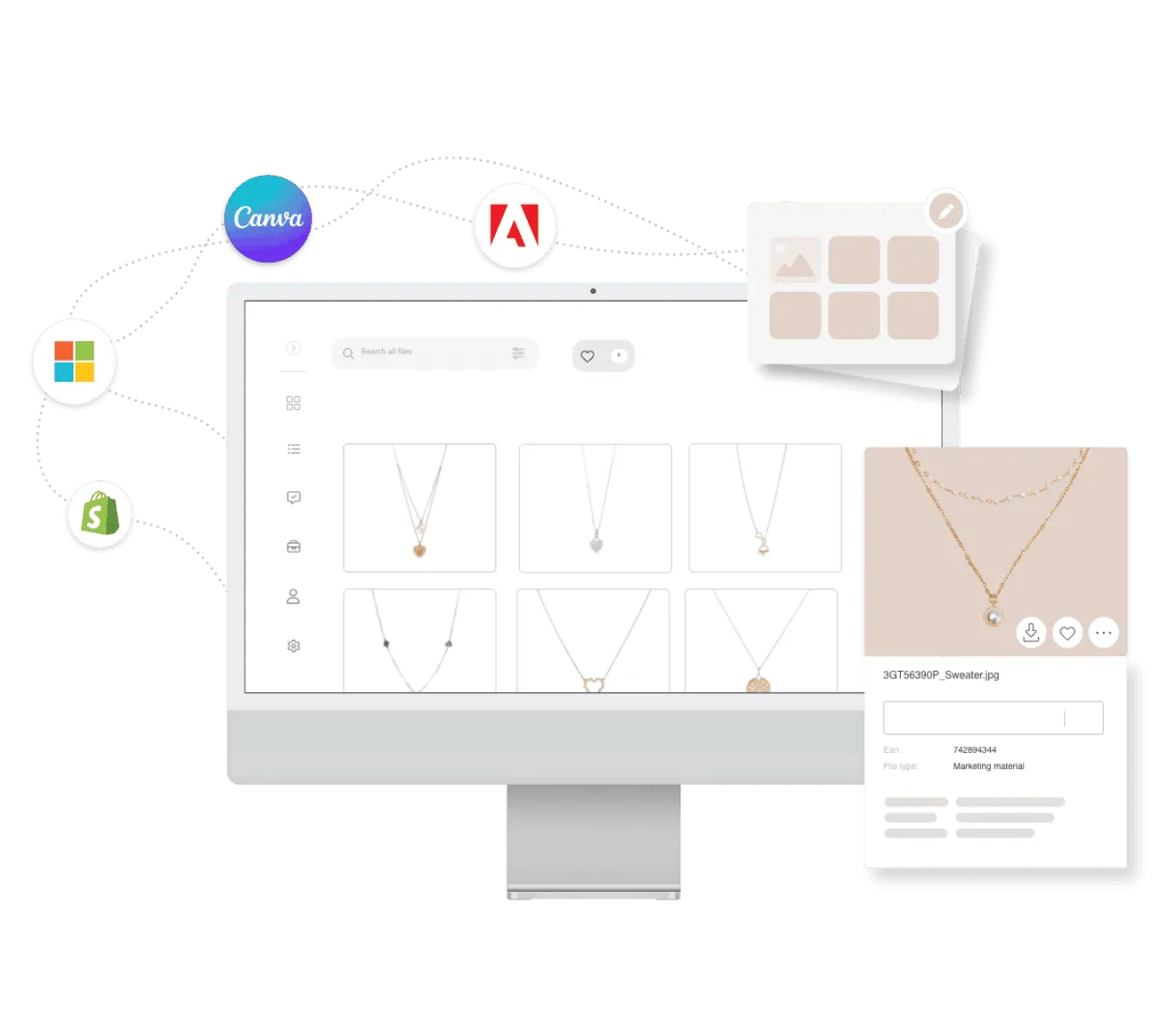
A Digital Asset Management (DAM) system is the heart of modern file organisation. It is far more than cloud storage. Our DAM system was built to manage, process and distribute digital assets such as images, videos, logos, presentations and PR material efficiently.
So how do you organise files across a company with a DAM system? Here are some of the core capabilities:
- Central storage: every asset sits in one place, the single source of truth. No more files scattered across SharePoint, Google Drive or Dropbox.
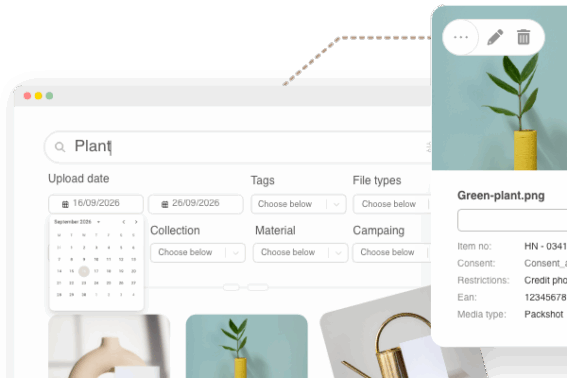
- Comprehensive metadata: every file can carry detailed metadata such as keywords, descriptions, copyright and usage rights. That makes finding files extremely fast and precise.
- Intelligent search: thanks to metadata and AI-assisted search, you find any file in seconds, even when you cannot remember the exact filename. We use AI for faster results, face recognition and auto-tagging.
- Automated workflows: set up rules for approving, categorising and distributing assets to cut down on manual work.
- Built-in image editing: upload an image and our system can serve it automatically in different formats, sizes and resolutions for different channels. With our download templates, assets are cropped and converted automatically on download.
- GDPR compliance: dedicated tools such as our Photo Consent Tool help you manage consent for using images of people in a legally sound way.
- Support for more than 100 file types: PDFs, videos, Adobe InDesign files, 3D models – our system can manage them all, and often preview them straight in the browser.
With more than 350 global brands as customers, we know that an efficient DAM system is the key if you want to organise files across a company to the highest standard.
Product Information Management (PIM)
For companies with a lot of products – particularly in e-commerce – a Product Information Management (PIM) system is indispensable. It centralises all product-related data and assets.
If you are wondering how to organise files across a company, and product information in particular, a PIM system is the answer:
- Product data hub: all product information – descriptions, specifications, prices, technical data and more – is stored centrally.
- Assets linked to products: product images, videos, manuals and other media assets are linked directly to the relevant products and managed through the integrated DAM.
- Omnichannel delivery: distribute consistent product information to webshops (for example Shopify), marketplaces, catalogues and other channels.
- Built to integrate: our PIM system connects seamlessly with ERP systems, CMS platforms and e-commerce platforms to keep data moving without friction.
A PIM system reduces errors, shortens the time it takes to launch new products, and makes for a better customer experience, because every channel is served with current and correct product information.
Frequently asked questions about organising files in a company
1. What is the best way to organise digital files in a large company?
For a large organisation a dedicated Digital Asset Management (DAM) system is essential. It gives you one central platform for every digital asset, combined with metadata, intelligent search, version control and detailed access rights. A consistent folder structure and naming conventions complete the picture alongside the technical solution.
2. What is the difference between DAM, PIM and cloud storage such as Dropbox?
Cloud storage such as Dropbox is built primarily for storing files and sharing them easily. DAM (Digital Asset Management) and PIM (Product Information Management) are specialised systems:
- DAM: focused on managing, optimising and distributing every digital asset (images, videos and so on) with advanced capabilities such as metadata, version control, format conversion and analytics.
- PIM: focused on centralising and enriching product information, usually closely linked to a DAM system for the media assets belonging to those products.
Both go well beyond what simple cloud storage does, by offering process-driven workflows, extensive integration options and a single source of truth for particular kinds of data.
3. What does a DAM system do for organising marketing material?
A DAM system changes how marketing material is organised. It makes sure your team always reaches the most current, on-brand assets. The benefits are faster approval processes, automatic format adjustments for different channels, consistent branding and a marked reduction in time spent searching and in mistakes. You can generate and distribute the right header images for social media, your website and print from one central source in a few clicks.
4. How do I make sure data stays secure when organising files?
Data security matters enormously. Choose a solution that offers secure data hosting in the EU, GDPR compliance and detailed permission settings. At Kontainer we host your data in secure EU data centres and our systems are GDPR compliant. We also allow fine-grained control of access rights, so only authorised people can reach particular content.
5. How does Kontainer fit into our existing software landscape?
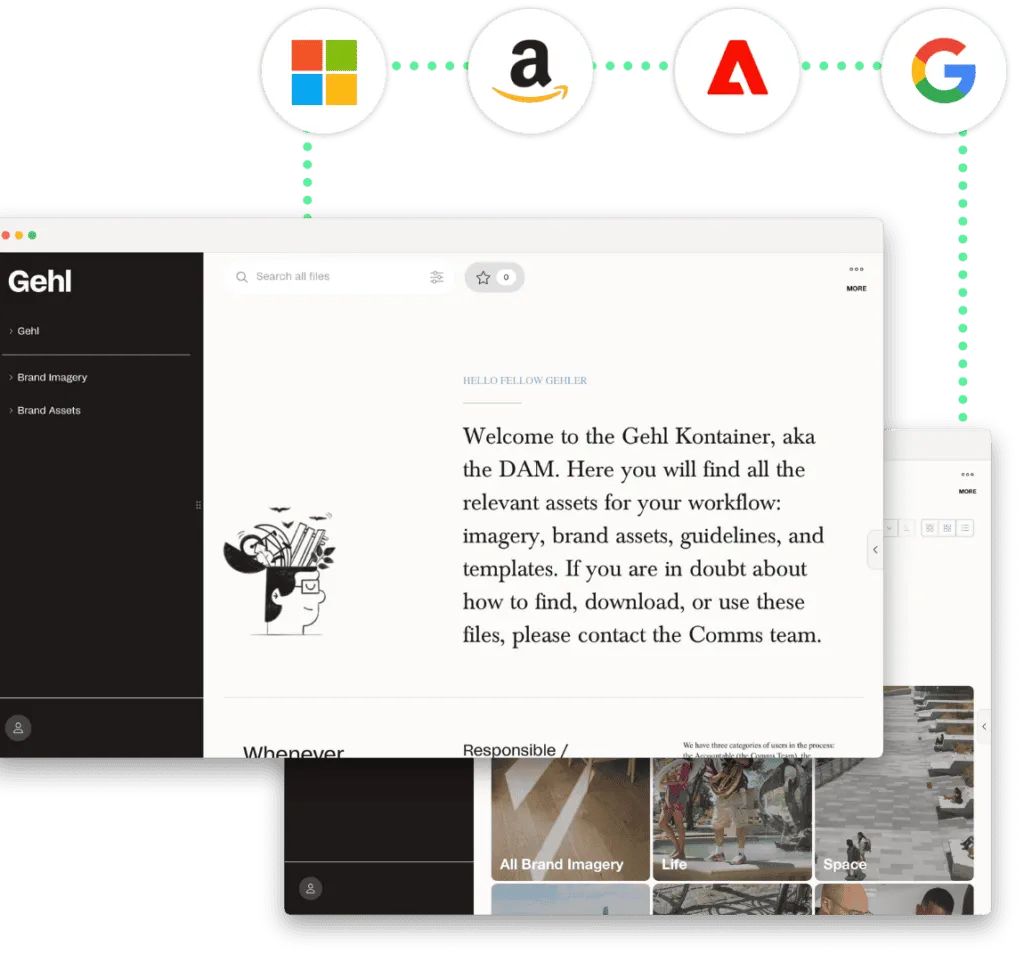
Our solutions are built to integrate. We offer a complete RESTful API for DAM and PIM that makes it possible to connect to almost any system. Beyond that we have ready-made integrations for common tools such as Office 365, Adobe Creative Cloud, Shopify, various CMS platforms (WordPress, Drupal, Umbraco) and ERP systems. That keeps the workflow smooth and cuts out duplicated effort in managing and using files.